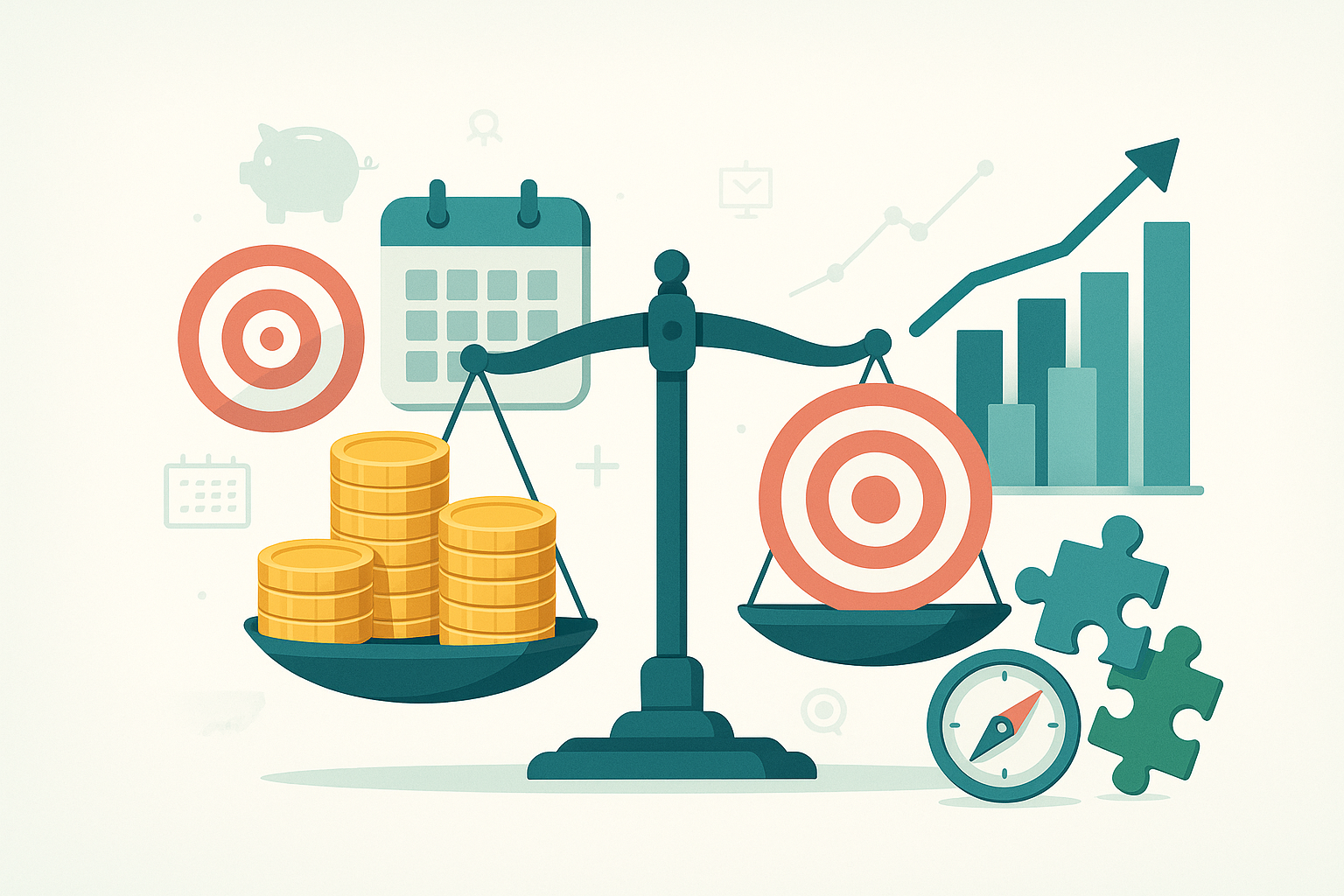


In the age of the “gig economy” and digital transformation, the ambition to build more than one income source has become a dominant trait among youth and emerging investors. The idea of having several financial streams pouring into the river of your wealth is brilliant and strategically smart; however, the haphazard execution of this idea often leads to counterproductive results.
Many fall into the trap of “Financial Fragmentation,” where they end up spending too much time and effort on several projects without any of them achieving real success. In this article, we will take a deep look at the common mistakes people make when trying to build more than one income source at once, and how you can avoid them to build a sustainable financial empire.

First: The “Expansion Before Mastery” Trap (The Greatest Mistake)
The most common mistake is attempting to launch a second and third income source before the first source has reached a stage of stability or profitability.
-
Why do people fall into this? Excessive enthusiasm and the desire for quick wealth make a person think that a high number of projects equals a high amount of money.
-
The Result: Resources (time, money, effort) are distributed across multiple fronts, meaning each project receives only a fraction of the necessary attention, and consequently, they all fail.
-
The Strategic Solution: Focus on building one income source until it reaches the stage of “automation” or stable profitability. Then, use those profits to fund and launch the next source.
Second: Ignoring the “Opportunity Cost”
When you decide to build a new income source, you are not just investing money; you are investing your time, which is your most valuable resource.
-
The Mistake: Starting a new project that generates a small return, while investing that same time into developing your primary project would have achieved a doubled return.
-
Example: A professional designer leaves a major project to focus on building a YouTube channel that might not generate profit for a year. Here, the opportunity cost was very high.
-
The Solution: Before adding any new income source, ask yourself: “Is this the best use of my time right now?”
Third: Lack of Synergy Between Income Sources (Skill Fragmentation)
Seeking an income source in a field completely unrelated to your current skills consumes massive mental energy just to learn from scratch.
-
The Mistake: A software engineer trying to build an income source through “currency trading” without having any prior financial experience.
-
The Impact: He will be forced to spend hundreds of hours learning instead of building.
-
The Solution: Look for “Connected Diversification.” If you are a photographer, make your second source selling photos online, and your third source offering a photography course. This way, each project feeds the other.
Fourth: Neglecting Maintenance (The Illusion of Absolute Passive Income)
Some believe that once an income source is built, it will work forever without intervention. This is one of the most dangerous illusions.
-
The Mistake: Building a website or a channel and then completely abandoning it to build another project.
-
The Reality: Every income source needs maintenance, updates, and follow-up. Neglecting the first source for the sake of the second may lead to the collapse of the first and the evaporation of its profits.
-
The Solution: Allocate fixed time in your weekly schedule to maintain current assets before starting to build new ones.
Fifth: Poor Financial Management and Mixing Accounts
When income sources multiply, financial management becomes more complex.
-
The Mistake: Mixing the profits of “Project A” to fund the losses of “Project B” without accurate accounting.
-
The Result: You might think you are profiting, while in reality, one project is draining the other.
-
The Solution: Open a separate bank account for each major income source and monitor the “net profit” for each one individually.

See also
- When Should You Start Investing? The Right Age Based on Your Goals
- The Difference Between Building a “Fleeting Project” and a Sustainable “Digital Asset”
- How to Plan for Building a Sustainable, Long-Term Passive Income Source?
Sixth: Comparison Table: Sequential vs. Parallel Building
| Aspect of Comparison | Sequential Building (Successful) | Parallel Building (Risky) |
| Mental Focus | Very high on a single goal | Scattered among several goals |
| Profitability Speed | Fast due to intensity of effort | Very slow or non-existent |
| Risk Management | Calculated and secured risk | High risk of total collapse |
| Sustainability | Strong (solid foundations) | Weak (fragile construction) |
Seventh: Professional Burnout and Ignoring the Human Aspect
Attempting to manage more than one income source requires significant nervous and physical effort, especially in the founding stages.
-
The Mistake: Working 16 hours a day to build 4 income sources at once.
-
The Result: Reaching a state of exhaustion that forces you to stop working entirely for months, destroying everything you built.
-
The Solution: Apply the “Gradualism” rule. Do not add any new income source unless you have a “surplus” of energy and time, and never at the expense of your health or family.
Eighth: Strategic Tips for Building Multiple Income Sources Successfully
-
The 80% Rule: Do not start building a new income source until your current source is operating at 80% efficiency without your constant direct intervention.
-
Invest in Automation: Before expanding, look for technical tools or employees to manage routine tasks in your first project.
-
Start Small: Test the new income idea with minimal effort (MVP – Minimum Viable Product) before investing large sums or long periods of time into it.
-
Legal and Tax Awareness: Ensure that multiplying your sources does not put you in complex legal or tax problems that outweigh your profits.

Conclusion: Quality Beats Quantity
Building more than one income source is a marathon, not a 100-meter sprint. The mistake is not in the desire for multiplicity, but in “haste.” The person who builds one solid source every two years will find themselves after 10 years owning 5 strong and stable sources. However, the person who tries to build 5 sources in one year often finds themselves after 10 years looking for a place to start over.
Make your goal “Smart Growth,” maintain your balance, and remember that one successful and stable income source is better than ten struggling ones that drain your energy and money.
FAQ About Building Income Sources
- Can I build two income sources at once if I am unemployed?Yes, because your time is fully available. But even in this case, it is preferred to focus 80% on the source closest to profitability and 20% on the other.
- When do I know it is time to add a new income source?When you find that your current project has achieved steady profits for three consecutive months, and you have at least 10 hours of “free” time per week without affecting the quality of the current work.
- What is the best type of income source to start as a “second” source?The best is always “Passive Income” related to your expertise in the first source, such as selling a book explaining how you succeeded in your first project.