
In the world of modern economics, the question is no longer “How do I make money?” but rather “How do I protect the money I make and ensure its continuity?”. Relying on a single financial flow is a major risk that could devastate your stability at the first sign of a crisis. Here lies the importance of understanding risk distribution strategies between different income sources.
Risk distribution is not just about distributing money; it is about distributing time, effort, and dependency across various economic sectors. In this article, we will dive deep into strategic financial planning to learn how to build a portfolio of income sources that resists shocks and grows during prosperity.

First: The Concept of Risk Management in Income Sources
Risk management simply means reducing the impact of a “Single Point of Failure.” If your job is your only source, the risk of losing it means a 100% loss of income. However, when you possess several income sources, the failure of one does not mean financial collapse; instead, it provides you with enough flexibility to rebalance.
Effective risk distribution relies on the principle of “Asset Correlation”—choosing sources that are not affected by the same economic factors at the same time.
Second: Core Strategies for Distributing Risk Between Income Sources
To achieve the highest levels of financial security, you must follow well-studied strategies for diversifying income:
- Qualitative Distribution Strategy (Income Type)Your financial portfolio should balance three types of income:
-
Active Income: (Jobs, freelancing) provides immediate liquidity but requires your time.
-
Passive Income: (Rentals, stock dividends) continues without direct intervention and protects your time.
-
Growth Income: (Investing in startups, building digital assets) may be risky at first but possesses an immense capacity to multiply.
-
- Sectoral Distribution Strategy (Non-Correlation)It is a mistake for all your income sources to be linked to a single sector. For example, if you work as a software engineer and invest all your savings in tech stocks, you are exposed to a double risk if the technology sector faces a crisis.
-
Solution: Diversify your sources between real estate, technology, agriculture, or consumer goods.
-
- Geographic Distribution StrategyIn the era of globalization, it is no longer wise for your income to be linked to a single currency or the economy of a single country.
-
Application: Work with international clients (in Dollars or Euros), invest in global investment funds, or own digital assets that address a global audience. This protects you from local currency fluctuations or economic recession in your home country.
-
Third: Risk Distribution Matrix (Correlation and Volatility)
To understand how to distribute risk between income sources, we can use the following table to evaluate sources:
| Income Source | Risk Level | Effort Level | Degree of Volatility |
| Fixed Job | Low (Short term) | High | Very Low |
| Dividend Stocks | Medium | Very Low | Medium |
| Real Estate (Rental) | Low | Medium | Low |
| Digital Projects (SaaS) | High | High (Initially) | High |
| Affiliate Marketing | Medium | Medium | High |
Fourth: Practical Steps to Building a Crisis-Resistant Income Portfolio
-
Step 1: Analyze the Primary Source: Identify the weaknesses in your current income source. Is it tied to your physical presence? Is it linked to the policy of a specific country? Can it be replaced by Artificial Intelligence?
-
Step 2: The 70-20-10 Rule: Distribute your time and money as follows:
-
70% to support and develop your current primary income source.
-
20% to build a second income source related to your skill (semi-passive income).
-
10% to venture into building high-risk, high-reward assets (digital assets or new investments).
-
-
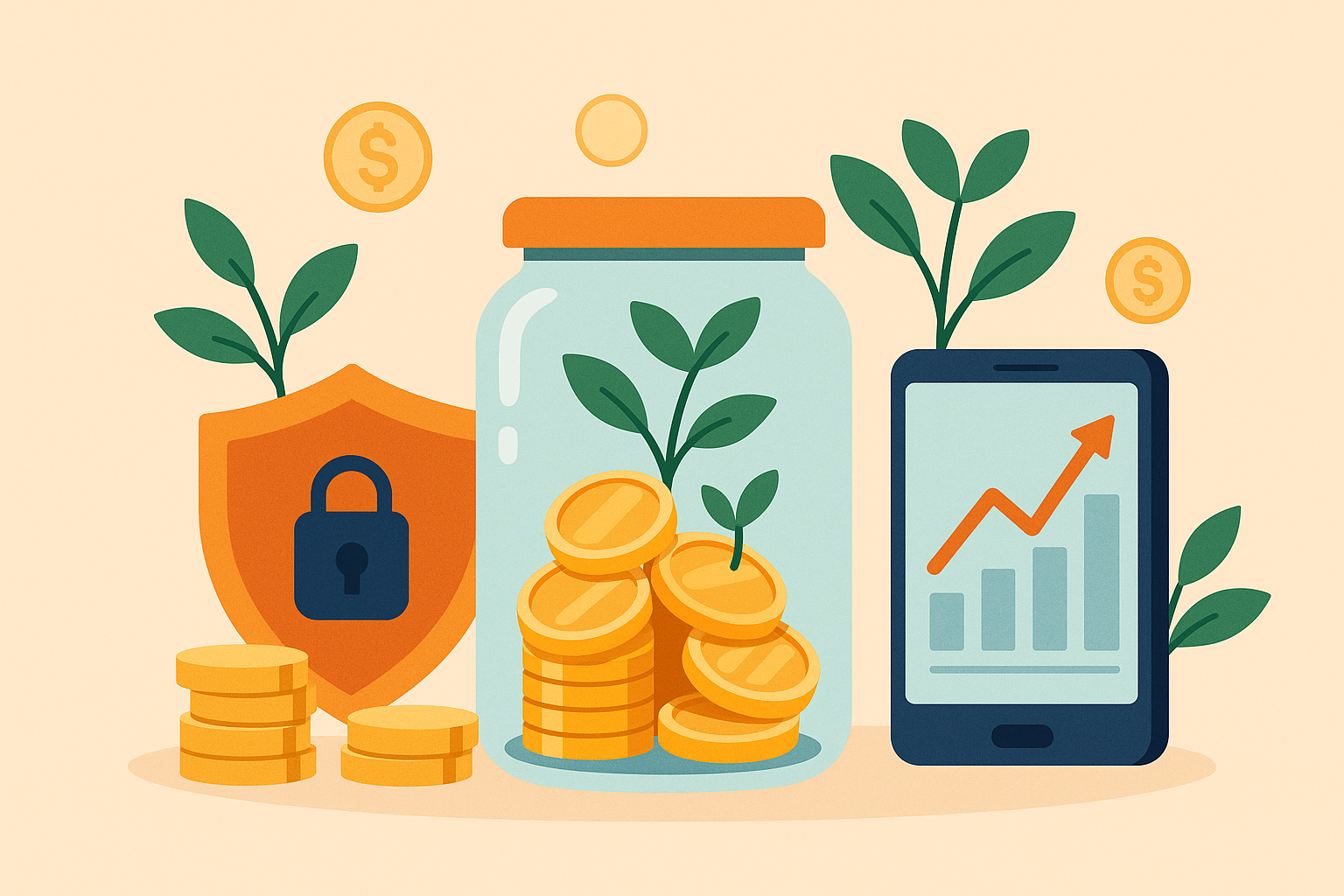
Step 3: Build the Financial “Defense Wall”: Before expanding into high-risk income sources, ensure you have health insurance and an emergency fund covering your expenses for several months. This wall prevents you from liquidating your investments during market losses.

See also
- When Should You Start Investing? The Right Age Based on Your Goals
- How to Plan for Building a Sustainable, Long-Term Passive Income Source?
- Common Mistakes When Attempting to Build Multiple Income Streams Simultaneously
Fifth: Risk Distribution Challenges and How to Overcome Them
-
Distraction: Trying to manually manage 10 income sources will lead to failure in all of them.
-
Solution: Automation and delegation. Make the sources operate as a “system of systems,” not through your manual effort.
-
-
Management Costs: Multiple sources may mean multiple taxes and administrative expenses.
-
Solution: Focus on sources with high profit margins and low operating costs (such as digital assets).
-
-
Overconfidence: Believing that a specific source will never fail.
-
Solution: Periodic review (every 6 months) of the performance of all income sources and rebalancing the portfolio.
-
Sixth: The Importance of Digital Assets in Income Risk Distribution
In 2026, digital assets (websites, apps, recorded courses) are considered some of the best tools for risk distribution.
-
Low Cost: They do not require warehouses or many employees initially.
-
Transnational: They are not affected by specific geographic conditions.
-
Scalable: They can serve 100 customers or 1,000,000 customers at nearly the same operating cost.

Conclusion: The Path to Financial Immunity
Distributing risk between different income sources is not just a financial strategy; it is a lifestyle that grants you peace of mind and freedom. In a volatile world, the person who possesses diverse sources (real estate, financial, and digital) is the one who can sleep in peace, realizing that their financial future does not hang on a single scale.
Start today by reducing your dependence on your sole source and intelligently build your additional channels. Remember that “security is not in a high salary, but in the multiplicity of channels from which that salary comes.”
FAQ About Income Risk Distribution
- When can I consider myself successful in distributing risk?When your largest income source represents less than 50% of your total annual income. This is the safety point that makes the loss of any single source containable.
- Is investing in gold considered an income source?Gold is a store of value (Wealth Preservation) and not an income source in itself because it does not generate periodic returns unless you trade it. However, it is an essential part of an asset protection strategy.
- How do I start distributing my income if I have a small salary?Start by investing in yourself (learning a digital skill), then invest very small amounts in stocks or Exchange Traded Funds (ETFs). Diversification starts with the mindset before the budget.